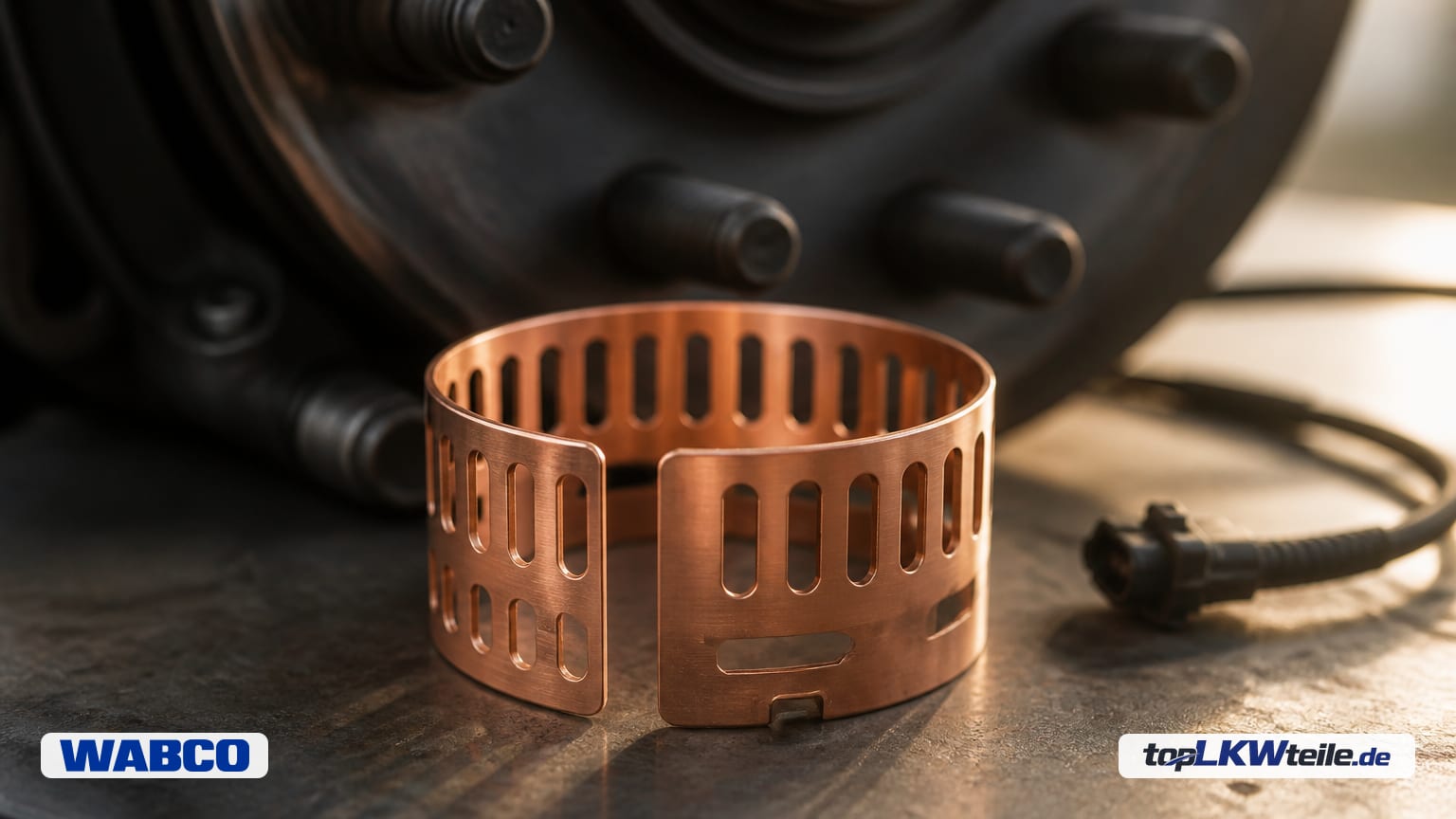
Why this clamp sleeve matters more than it looks
In heavy-duty braking systems, tiny tolerances make a big difference. The WABCO Klemmhülse, Raddrehzahlsensor locks the wheel speed sensor in place so ABS/ESP/EBS can read an accurate signal. Whether you run distribution routes, long-haul, buses or trailers, a firm, repeatable sensor seat translates into dependable control—and fewer headaches down the road.
Who needs this part?
Drivers, workshops and fleet managers operating trucks, buses, and trailers equipped with WABCO systems. Anywhere a wheel speed sensor sits in a carrier or knuckle, the WABCO Klemmhülse, Raddrehzahlsensor provides the clamping force that preserves the designed air gap to the tone ring.
When should you replace it?
Swap the sleeve if it shows corrosion, deformation, loss of clamping tension, or if the sensor no longer feels snug. It’s also smart practice to install a new sleeve whenever you replace the sensor itself. Grit, moisture and thermal cycles can fatigue an old sleeve—renewing it restores the sensor’s secure seat and signal stability.
Key advantages and quality
With WABCO brand quality you’re buying fit and durability for the braking assembly. The WABCO Klemmhülse, Raddrehzahlsensor helps maintain a steady signal across changing loads and temperatures, reducing the chance of noisy readings and intermittent warnings. It’s a low-cost fix that keeps critical systems calm and consistent.
Precision where it counts
A precise sleeve prevents micro-movement that can disturb the air gap. The result is less sensor chatter and more reliable data. In real-world conditions—salt, spray, dust—secure seating matters. That’s exactly the job the WABCO Klemmhülse, Raddrehzahlsensor was built to do.
Typical symptoms of a tired sleeve
Watch for occasional ABS lights, intermittent wheel speed faults, or a sensor that feels loose in its bore. Visual clues include corrosion on the sleeve, a distorted slot geometry, or uneven seating. These signs don’t always point to the sleeve alone—always check the sensor, connector and bore condition—but replacing the WABCO Klemmhülse, Raddrehzahlsensor is often the fastest path back to a rock‑solid fit.
Installation and care tips
Clean the sensor bore thoroughly before installation; remove rust, debris and old grease without scoring the seating surface. Insert the WABCO Klemmhülse, Raddrehzahlsensor without forcing or cocking it. A light, manufacturer‑approved assembly aid can help; avoid unsuitable lubricants. After seating the sensor, verify cable routing and connector integrity, then confirm operation via scan tool or a short road test. No hammers, no guesswork—just a straight, stress‑free fit.
Find the right match—fast
Use our vehicle selector to filter down to exact-fit parts: search by HSN/TSN or select make/model/engine. You’ll only see compatible items for your vehicle. We also list OE cross‑reference numbers on the product page so you can double‑check your existing reference quickly—no need to memorize anything.
Buying advice for workshops and fleets
Keep at least one spare on hand if you service hubs or sensors regularly—it avoids downtime when a sleeve is corroded or deforms on removal. If one side shows heavy wear, consider replacing both on the axle for uniform clamping. Value matters, too: at just €11.99 incl. VAT, the WABCO Klemmhülse, Raddrehzahlsensor is cost‑effective insurance for clean ABS signals.
See it in the shop and order today
Ready to restore a precise sensor seat? Check compatibility and view the WABCO Klemmhülse, Raddrehzahlsensor here: WABCO Klemmhülse, Raddrehzahlsensor. Small part, big confidence—fitted right.